What is the DBGI?
Documenting plant chemistry in botanical garden collections.
Most plant chemistry remains undocumented
Plants produce an extraordinary diversity of molecules. There are around 400,000 known vascular plant species worldwide1, yet we have documented the chemistry of only 6.9% of them2.
What DBGI does
We collect documented plant material and specimen information from botanical garden collections, then use mass spectrometry-based metabolomics to digitise their chemistry. We process and release the resulting data as an open, shared resource for researchers and the public.
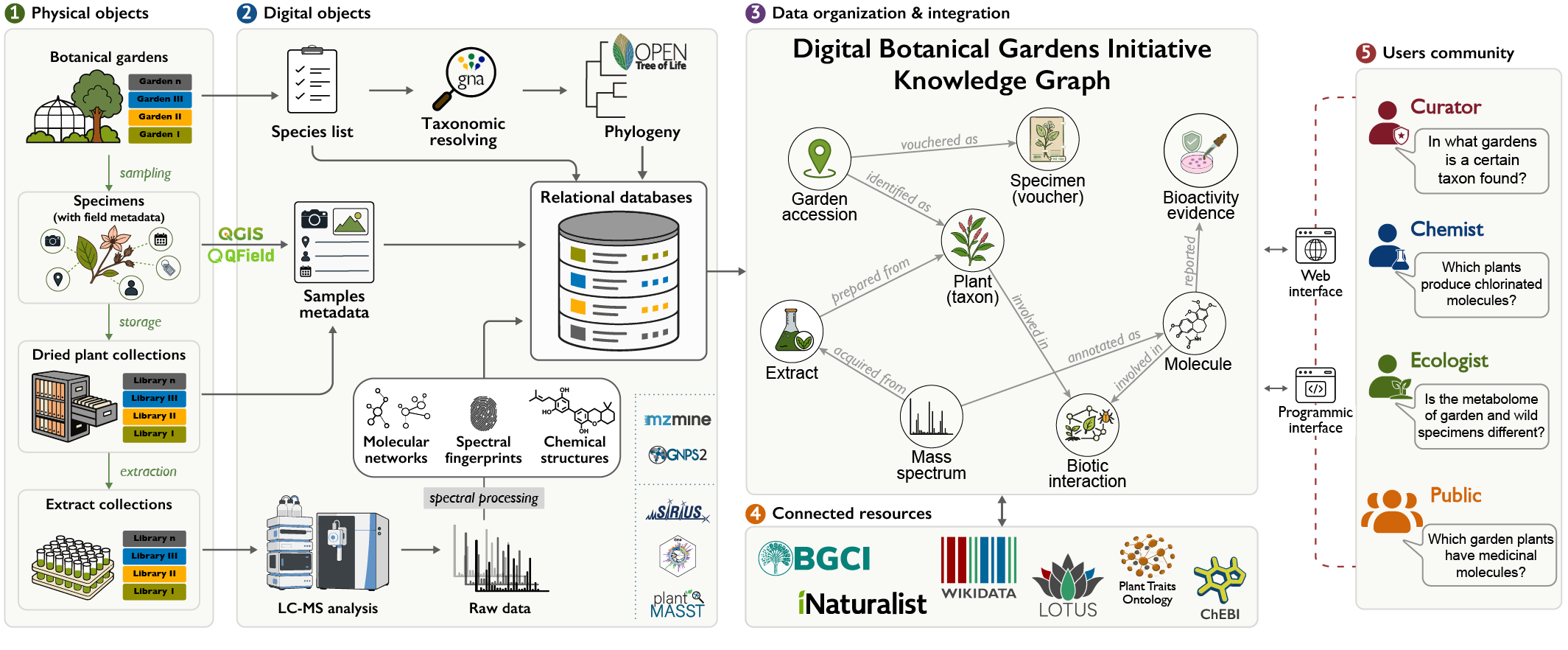
Why botanical gardens
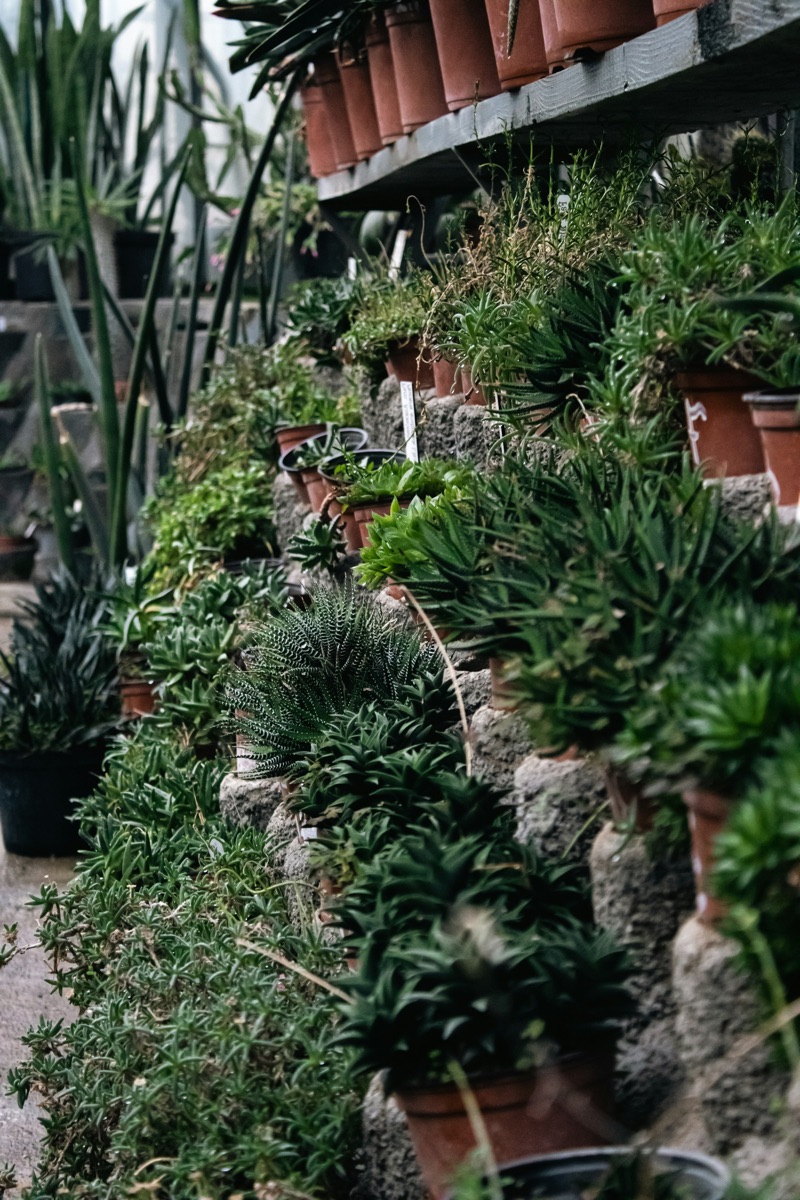
Botanical gardens are ideal hubs for large-scale, coordinated sampling. They bring together thousands of taxonomically curated species in one place, where material can be readily accessed, documented and sampled. Gardens can also provide samples from species that are rare or even extinct in the wild3.
Why it matters
As biodiversity loss accelerates, many plant species will disappear before their chemistry has ever been recorded5. Losing a species means losing not only a potential source of molecules for medicine. It means losing part of the chemical language through which living organisms communicate, survive and interact with their environments, which we are still far from understanding. DBGI is building an open resource for plant chemistry to support research across fields, make the chemical dimension of plants more visible to the public, and help turn the chemical knowledge it generates into new arguments for plant biodiversity conservation.
of known flowering plant species are potentially threatened with extinction6.
References
- Christenhusz, M. J. M., & Byng, J. W. (2016). The number of known plants species in the world and its annual increase. Phytotaxa, 261(3), 201–217. https://doi.org/10.11646/phytotaxa.261.3.1
- Wikidata. (2026). Plant species linked to at least one reported chemical compound [SPARQL query]. Retrieved 6 July 2026, from https://qlever.dev/wikidata/eUC1FD
- Mounce, R., Smith, P., & Brockington, S. (2017). Ex situ conservation of plant diversity in the world's botanic gardens. Nature Plants, 3(10), 795–802. doi.org/10.1038/s41477-017-0019-3
- Kang, K. B., Ernst, M., van der Hooft, J. J. J., da Silva, R. R., Park, J., Medema, M. H., Sung, S. H., & Dorrestein, P. C. (2019). Comprehensive mass spectrometry-guided phenotyping of plant specialized metabolites reveals metabolic diversity in the cosmopolitan plant family Rhamnaceae. The Plant Journal, 98(6), 1134–1144. doi.org/10.1111/tpj.14292
- Ceballos, G., & Ehrlich, P. R. (2018). The misunderstood sixth mass extinction. Science, 360(6393), 1080–1081. doi.org/10.1126/science.aau0191
- Royal Botanic Gardens, Kew. (2023). State of the World's Plants and Fungi 2023. doi.org/10.34885/wnwn-6s63